
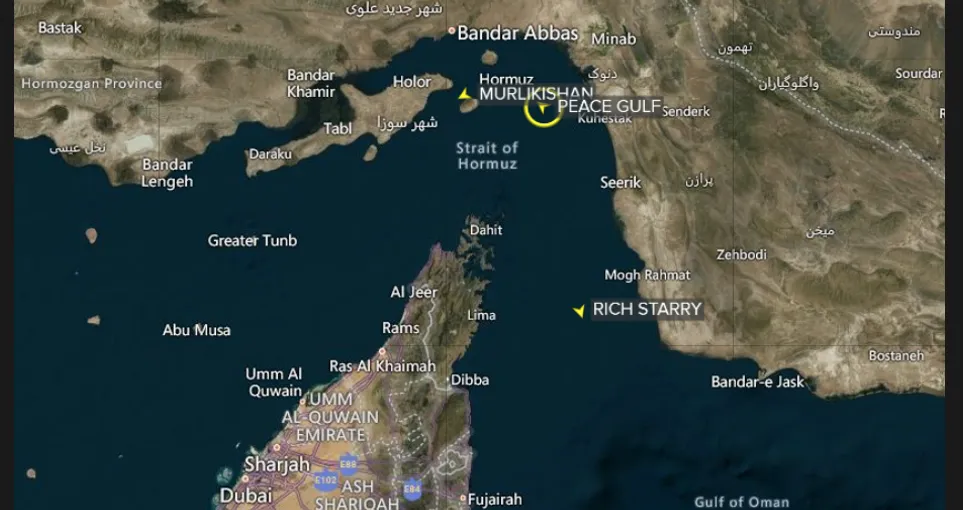
The week ending September 2, 2026, brought several developments that directly affect China-to-Iran freight forwarding. The main themes were tighter US sanctions against Iran-related shipping networks, the continued effective closure of the Strait of Hormuz, and the decision by Chinese state-owned tanker fleets to stop transiting the chokepoint. For Iranian importers and traders sourcing goods from China, these factors mean higher rates, longer lead times, and more complex risk management.
New US Sanctions and Beijing’s Response
On August 25, 2026, the US Treasury announced sweeping sanctions targeting more than 60 entities, brokers, and vessels involved in transporting Iranian oil. The package aims to squeeze Iran’s revenue streams and warns third-country partners against facilitating Tehran’s trade. China, as the largest buyer of Iranian crude, was immediately in the spotlight.
Beijing responded by stating that unilateral US sanctions have no basis in international law and that China will take necessary measures to protect its legitimate rights and interests. A Chinese foreign ministry spokesperson said Washington’s actions threaten global economic order. While this rhetoric suggests China will not easily abandon Iranian oil purchases, operational data shows that Chinese shipping companies are now moving much more cautiously. Source: The New York Times (Chinese).
Chinese State Tankers Avoid Hormuz and Bab al-Mandeb
According to Reuters shipping data, COSCO Shipping Energy Transportation and China Merchants Energy Shipping — two state-controlled giants operating more than 100 VLCCs — stopped sending tankers through the Strait of Hormuz and Bab al-Mandeb in late July 2026. Before the war, these companies handled roughly half of China’s Middle East crude imports.
Their vessels are now anchored outside the Persian Gulf and loading crude via ship-to-ship transfers in the Gulf of Oman, off Fujairah or near Omani ports. This workaround avoids the most dangerous chokepoints but adds voyage time, insurance premiums, and shuttle costs. For general container cargo moving from China to Iran, the same risk environment is pushing up ocean freight and war-risk insurance. Source: Iran International / Reuters.
Freight Rates Remain at War-Level Levels
Despite some days of reduced military activity, shipping costs from China to Iran are still priced at war-level rates. Industry reports indicate that a 40-foot container that normally moved from China to Iran for about $2,500–$3,500 is now costing $8,000–$9,000. The main drivers are higher war-risk premiums, longer booking queues, and a limited number of carriers willing to call at Iranian ports.
Which Cargo Is Most Affected?
Shipments from southern Chinese ports (Guangzhou, Shenzhen) and northern hubs (Shanghai, Tianjin) to Bandar Abbas, Bushehr, and Anzali are facing the following pressures:
- Time-sensitive or perishable goods: Delays of 10–20 days can spoil products or miss selling seasons. Air freight from China to Iran is the safer choice for these cargoes.
- Medium-value, high-volume goods: Importers should re-evaluate whether FCL container shipping or LCL groupage offers the better balance of cost and transit time at current rates.
- Urgent non-oil cargo: Rail freight via Central Asia or road freight by truck can bypass the maritime chokepoints entirely.
Practical Recommendations for Iranian Importers
In this environment, supply-chain planning matters more than ever:
- Book earlier: With limited vessel space and elevated rates, reserve freight 3–4 weeks ahead of your desired departure.
- Check insurance coverage: Make sure your policy covers war risks, transit delays, and damage on alternative routes.
- Consider multimodal options: Combining rail or road legs with sea freight can reduce exposure to Hormuz volatility.
- Work with an informed forwarder: The HamlChin team monitors port conditions and rates daily and can recommend the best routing for your cargo.
Conclusion
The past week confirmed that US sanctions and Strait of Hormuz tensions remain the dominant price drivers on the China-Iran corridor. Goods are still moving, but costs are staying high. For importers, success in this period depends on flexible routing, earlier planning, and partnering with a freight forwarder that understands both the Chinese export side and the Iranian import side.
To get the latest rates and a free consultation for your next shipment, contact HamlChin or reach us on WhatsApp.