
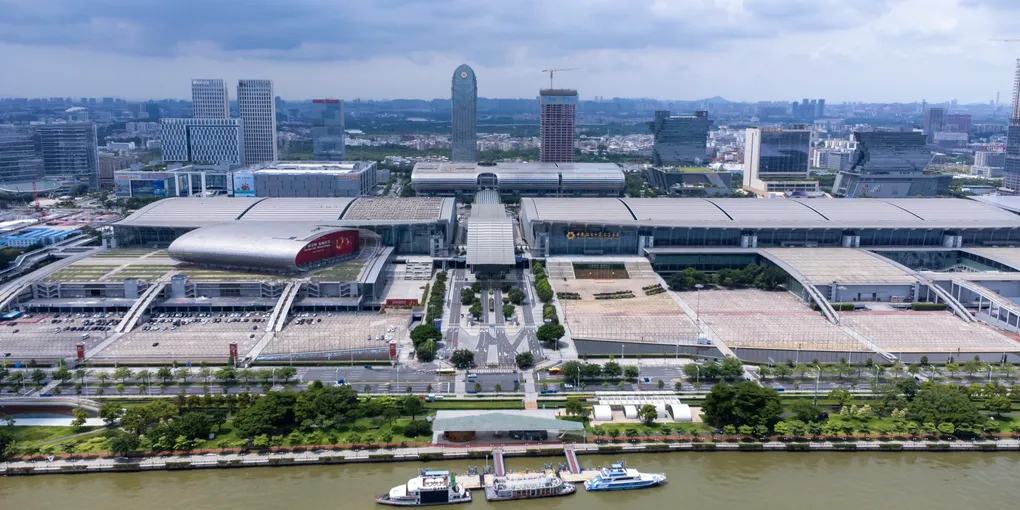
The 140th Canton Fair opened in Guangzhou today, 15 October, and runs through three phases until 4 November. For Iranian importers the fair has long been the start of the buying season, the week when next year’s prices, suppliers and product mix get decided.
This year one variable sits on top of all of it. Once the booth is paid for, the cargo has to travel home, and the Strait of Hormuz is effectively closed. This guide covers both halves of the job: buying in Guangzhou, and moving that purchase to your warehouse in Iran overland.
The 140th Canton Fair at a glance
The Canton Fair has run twice a year in Guangzhou since 1957 and remains China’s largest trade exhibition. The previous session drew 314,000 overseas buyers from 220 countries and regions.
| Phase | Dates | Theme |
|---|---|---|
| Phase 1 | 15–19 October 2026 | Advanced manufacturing |
| Phase 2 | 23–27 October 2026 | Quality home and building |
| Phase 3 | 31 October – 4 November 2026 | Consumer goods and health |
Total exhibition space is around 1.55 million square metres, with more than 30,000 exhibitors taking part. The halls are cleared and re-fitted between phases (20–22 October and 28–30 October), so no exhibition runs on those days and travel plans have to be built around the gaps.
Phase 1 carries most of what Iranian importers buy: machinery and tools, industrial automation, electrical goods and lighting, auto parts, vehicles and smart mobility, renewable energy and service robots. Phase 2 covers building materials, ceramics and sanitary ware, furniture and home decoration. Phase 3 is apparel, footwear, bags, carpets and textiles, food and medical equipment.
If you cannot travel: the fair comes to you
Every session, a sizeable share of Iranian buyers cannot get to China. Flight restrictions, travel cost and regional conditions are the usual reasons, and the organisers now run a separate service track for exactly that group.
The newest addition is live streaming from inside the halls aimed at Middle East and African markets. The hosts are drawn from eight countries and Iran is one of them; they are buyers themselves, and the organisers put their combined social-media following at roughly 1.65 million. Alongside the streams, the official platform stays open all year with exhibitor and product search, instant messaging with suppliers, appointment booking and online viewing of booths.
Remote buying has one hard requirement: somebody in China has to receive the goods, inspect them and consolidate them. Without that link, purchases from five suppliers turn into five small, expensive shipments.
This year’s difference: Hormuz is shut
The Strait of Hormuz has been effectively closed to normal commercial traffic since late February 2026, and the US blockade of Iranian ports has been in force since mid-July. Iranian officials have said plainly that reopening the strait is tied to their conditions being accepted, and that it stays closed until then (Al Jazeera, 4 October 2026).
Anyone buying this month should plan without container shipping to Bandar Abbas. War-risk insurance, suspended or restricted carrier services and slow discharge at the southern ports make the sea leg a gamble rather than a schedule. Our October analysis of the Hormuz escalation covers how the situation developed.
The same pressure has pushed the northern corridors to the centre of the market. China–Iran rail through Central Asia, trucking out of Khorgos and Kashgar, and the Caspian multimodal option via Anzali all feed into Iran through Sarakhs and Incheh Borun.
How goods bought in Guangzhou reach Iran
The table below is the whole picture from Guangzhou to Tehran. Times are door to door and exclude customs clearance.
| Mode | Typical transit | Best suited to |
|---|---|---|
| Truck | 18–25 days | Mid-size and mixed multi-supplier loads |
| Rail | 20–26 days | Full 40ft containers, larger volumes |
| Sea | Not a planning base at present | — |
| Air | 4–7 days | Samples and small, high-value items |
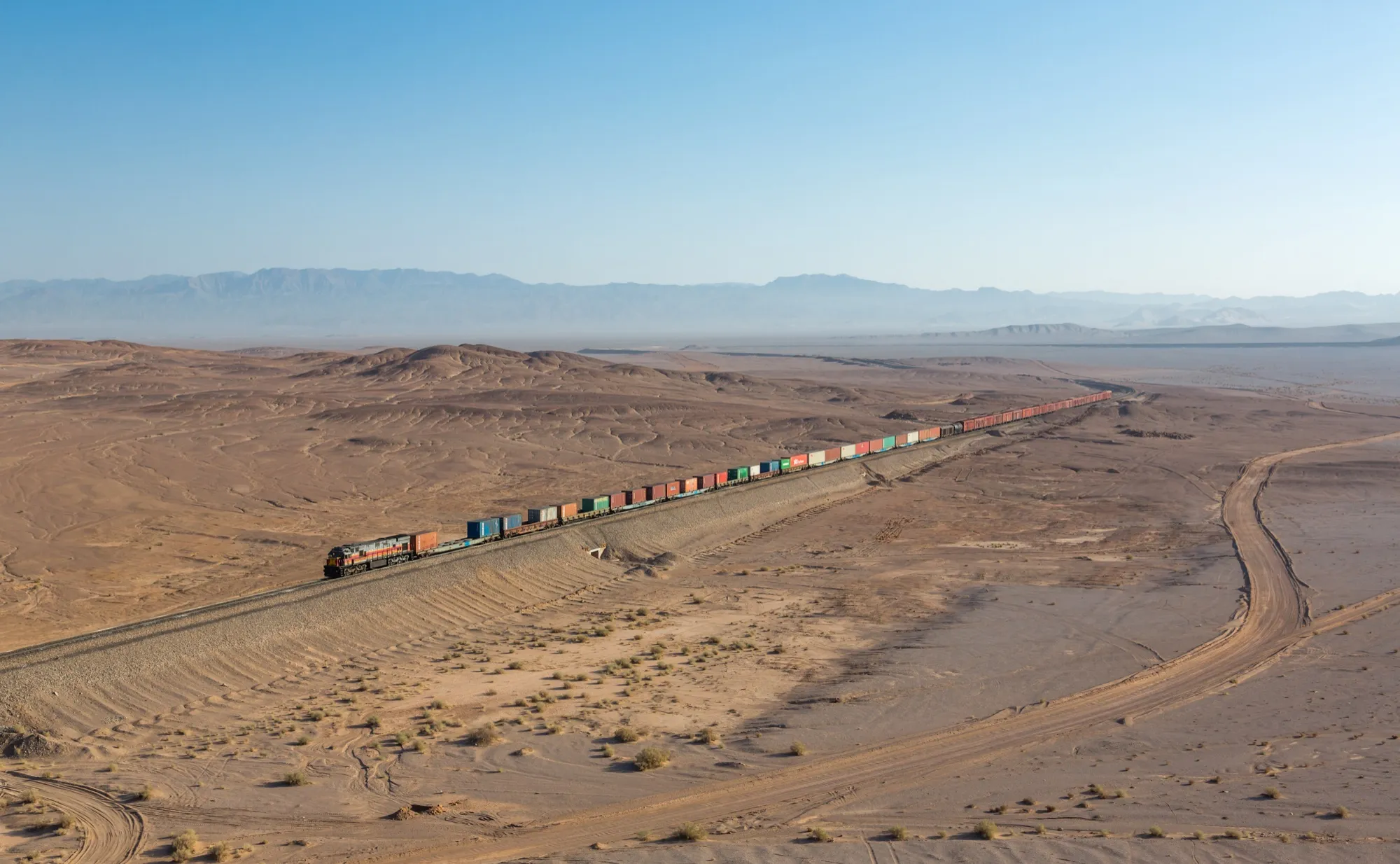
On the ground route, cargo is consolidated at our Guangzhou warehouse first. From there it either runs by truck through Khorgos or Kashgar, or by rail from China’s inland terminals to Alashankou and Khorgos, then across Kazakhstan and Turkmenistan and into Iran through Sarakhs or Incheh Borun. Customs clearance and delivery follow in Tehran, Mashhad, Tabriz and Isfahan.
Two technical details move the dates: the rail gauge break at Khorgos and Sarakhs, and border queues during peak weeks. We cover each corridor on the Khorgos route, the Kashgar route and the Alashankou rail route pages, with a full mode comparison in the land freight cost guide.
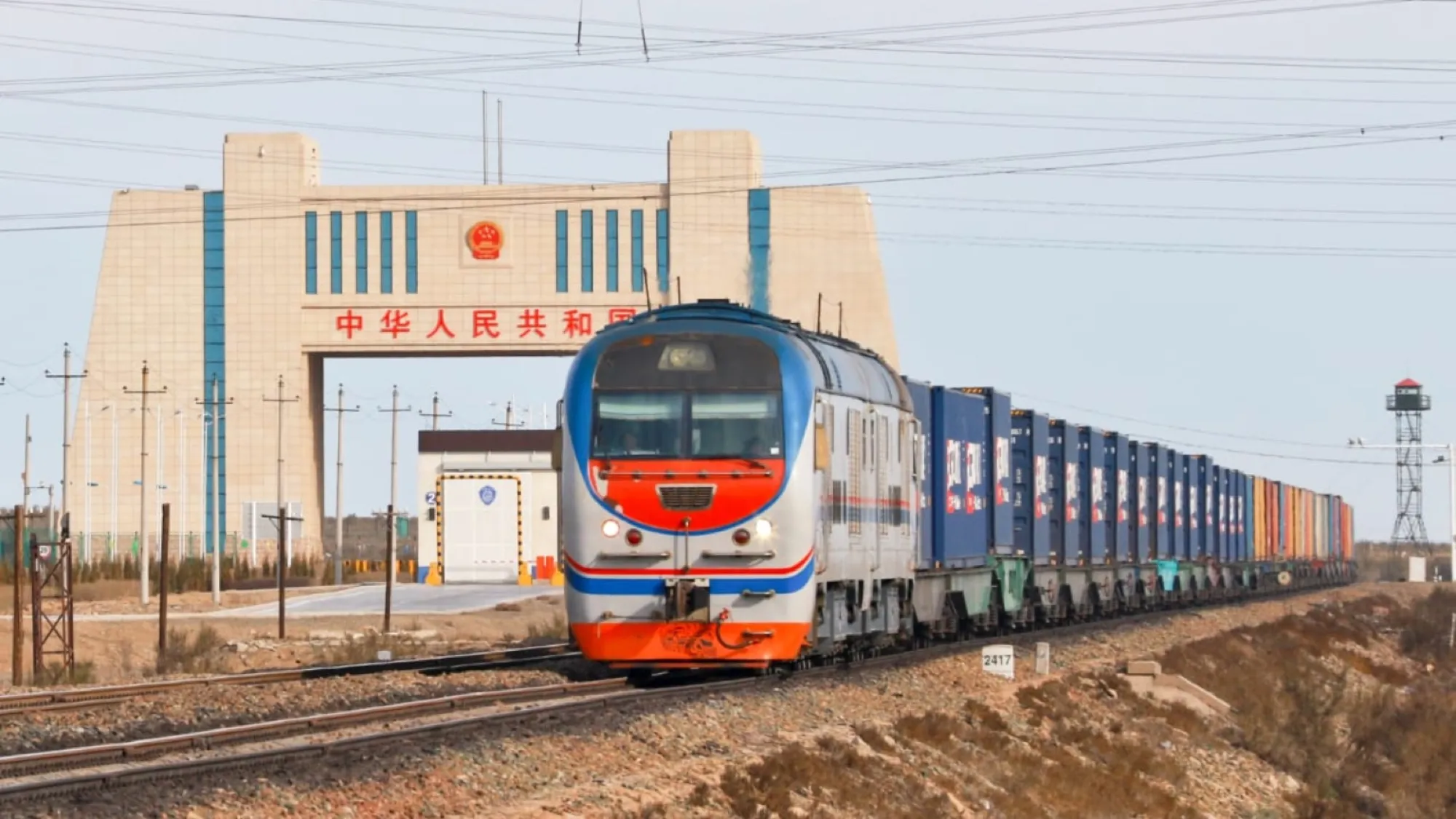
For urgent cargo, air freight stays the tool for samples and small components. For bulky and heavy loads, road freight and rail freight are the two working options this season.
Seven steps from booth to warehouse
-
Get your customs broker involved before you fly. Lock down the tariff heading and confirm that import order registration is possible before you commit to the purchase. Registering after the cargo lands creates storage costs and rework. Check restricted categories in the import regulations and the prohibited items list.
-
At the booth, collect carton dimensions and weights. Net weight is not enough. The packed carton size is what LCL pricing is based on. Photograph and film the goods, the packaging and the pallets, because that record is what settles a discrepancy later.
-
Set the samples aside. Carry small samples in your luggage and send bulky ones with the shipment. A courier sample is a reasonable extra cost when it confirms quality early.
-
Fix one delivery address. Ask every supplier to deliver to our Guangzhou warehouse. One address for all of them cuts inland haulage cost and removes a common source of document errors.
-
Consolidate and inspect. Loads from different suppliers are combined, inspected and repacked where needed. Stripping excess packaging reduces the billable volume, which matters directly in LCL.
-
Choose between LCL and a full container. Below roughly 10 CBM, groupage is cheaper. From about 15 CBM upwards, a full container or a dedicated truck is both more economical and less exposed to damage.
-
Keep the documents consistent. Invoice, packing list, waybill (CMR for road, CIM/SMGS for rail) and certificate of origin must agree on description, quantity and weight. Mismatched paperwork is the most common reason a shipment stops at the border.
Timing: buy in October, deliver in November and December
Goods bought in Phase 1 (15–19 October) that leave China by the end of the month normally reach Tehran in mid to late November. Phase 2 and Phase 3 purchases follow into December.
Two things are worth planning around. The last ten days of October are the busiest stretch of the year on this corridor, because every phase’s purchases arrive at the warehouses in the same window, so book space early. And do not leave cargo sitting in the supplier’s warehouse after the fair; Chinese storage charges plus damage and loss risk usually cost more than paying for the faster departure.
On pricing, the numbers move fast. In the Chinese market, rail freight for a 40ft container to Iran is being quoted in the region of USD 5,000 to 8,000, and LCL is priced per cubic metre. Treat these as ranges that shift with demand; only a quote based on your actual weight, volume and destination settles the figure.
Frequently asked questions
Is the Canton Fair open to Iranian buyers?
Yes. A Chinese business visa and pre-registration cover the trip, and for those who cannot travel, the official platform runs year-round with exhibitor search, instant messaging and appointment booking. Live streaming from the halls is also scheduled for Middle East markets this session, Iran included.
With Hormuz closed, which mode should I use?
Plan on truck and rail. Trucks leave through Khorgos or Kashgar, rail runs through Central Asia, and both enter Iran at Sarakhs or Incheh Borun. The sea route to Bandar Abbas is not dependable at present.
How do I handle purchases from several suppliers in Guangzhou?
Have every supplier send to our Guangzhou warehouse. The loads are consolidated, inspected and shipped as one unit or as coordinated shipments. It lowers the cost per cubic metre and gives you a single point of contact for documents and clearance.
How long does Guangzhou to Tehran take?
Door to door: truck 18–25 days, rail 20–26 days, air 4–7 days. Iranian customs clearance comes on top and varies with the commodity and how complete the paperwork is.
Can I buy without attending the fair?
Yes, provided you have a reliable partner in China to receive, inspect and consolidate the cargo. Without one, remote buying breaks into small and expensive shipments.
What decides the margin this season
For Iranian importers the Canton Fair has always been about the buying. This year the second half of the job decides the margin. With Hormuz shut, the quality of your overland planning is what turns a cheap purchase into profit rather than storage fees and delays. Confirm tariff headings and import order registration early, consolidate every supplier’s cargo into one warehouse, and book transport before the end-of-October rush.
To choose the right corridor and get a firm price against your weight, volume and destination, request a quote or reach the team on WhatsApp.