
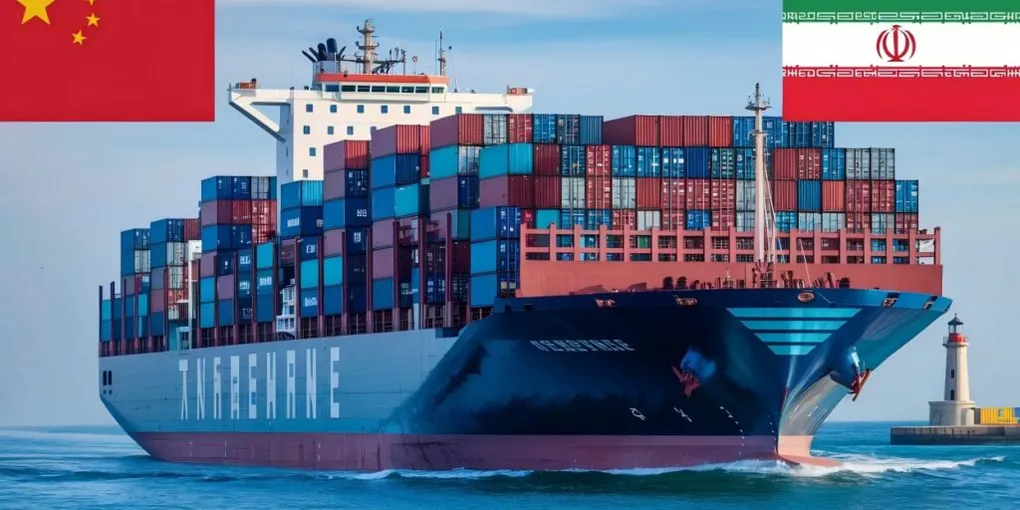
In the week ending August 19, 2026, shipping routes from China to Iran remain under the shadow of geopolitical tensions in the Persian Gulf and the Strait of Hormuz. For Iranian importers moving goods from Shanghai, Shenzhen, Guangzhou, Ningbo and Jiangmen to Bandar Abbas, Bushehr and Tehran, real-time tracking of maritime conditions, cargo insurance and supply-chain planning has never mattered more. Below, the HamlChin team reviews the week’s key events and what they mean for rates, transit times and risk.
Hormuz transits fall as a US Navy strike hits an Iran-bound container ship
According to a report by Hellenic Shipping News, only 16 vessels transited the Strait of Hormuz on August 11 — down from 17 the day before and from roughly 70–80 a day before the conflict began. On the same day, US Central Command (CENTCOM) said a US Navy MH-60 helicopter fired two Hellfire missiles at the Panama-flagged container ship Vela Nova, which had departed India’s Jawaharlal Nehru Port en route to Iran. This is not the first time a Chinese-managed vessel on an Iran-bound voyage has faced security threats: the ship’s manager, China-based Golden Valley Marine Investment, has yet to issue an official response.
In practical terms, this means delays in FCL and LCL sea freight from China to Iran, higher marine insurance risk, and a real possibility that some container lines reroute from the Persian Gulf to ports in Oman, Jebel Ali or even Karachi. For perishables, electronics and production-line parts, such delays can translate into losses worth millions of dollars. Working with a forwarder who knows alternative routings and current line schedules has therefore never been more important.
Oil, marine insurance and upward pressure on freight costs
Meanwhile, Hellenic Shipping News reported that Brent crude climbed above $87 following attacks on tankers and a war of words between Tehran and Washington. The US Treasury has also spoken of “unprecedented economic pressure” on Iran, which could bring tighter banking, insurance and shipping sanctions.
For traders, the practical takeaway is simple: container rates (FCL/LCL), all-risk premiums and clearance charges at Bandar Abbas will stay elevated in the short term. To benchmark current price trends, read our guide on sea freight costs from China to Iran in 2026 and check the breakdown of duties and charges in our customs tariff guide. A forwarder who understands today’s conditions and can source insurance and rate quotes quickly can be the difference between a profitable shipment and a stalled one.
Iran and China reaffirm the 25-year cooperation plan
Amid the regional crisis, Tehran-Beijing relations have sent positive signals for the future of trade and logistics between the two countries. Mohammad Mokhber, an advisor and assistant to Iran’s Supreme Leader, met China’s ambassador in Tehran and, stressing the “strategic” nature of Iran-China ties, called for faster implementation of the 25-year cooperation plan. The meeting also highlighted the potential of Iranian and Chinese knowledge-based companies in technology, the knowledge economy and logistics infrastructure.
For businesses, the strategic message is clear: despite political volatility and sanctions constraints, the Iran-China trade and shipping channel remains open — and both governments want to expand it. In particular, air freight from Guangzhou and Shanghai to Tehran and rail freight via Central Asia and Kazakhstan offer capacity that can absorb part of the stalled ocean volume.
HamlChin’s recommendations to importers right now
-
Plan with extra lead time. With fewer ships transiting the Strait of Hormuz, sea transit from China to Iran could run 5–15 days longer than usual — book urgent orders earlier.
-
Insure your cargo fully. With elevated maritime risk, adequate insurance cover for high-value and sensitive goods is essential.
-
Diversify your shipping route. For urgent cargo, air freight from Guangzhou or Shenzhen to Tehran is worth considering; for heavier shipments, combined rail-sea routings along safer corridors are an option.
-
Talk to a freight expert first. Before placing new orders, check the destination-port situation, the latest sanctions and current container-line status. You can find the required documents and conditions in our import regulations guide and customs clearance service; if you prefer a single all-in price, our door-to-door (DDP) service is the safer choice.
Further reading
- How much does sea freight from China to Iran cost in 2026?
- FCL sea freight service from China to Iran
- LCL (less-than-container-load) service
Summary
The week’s China-to-Iran shipping news can be summed up in two threads: on one hand, Hormuz tensions and maritime threats are raising both the cost and the transit time of shipments; on the other, the strategic will of Iran and China to grow their economic and logistics cooperation remains intact. For traders, success in this period comes down to flexible routing, strong insurance cover and an experienced forwarder by your side.
Main sources for this report:
- Hellenic Shipping News: Hormuz transits fall to 16 ships on Aug. 11 as US Navy fires on Iran-bound container ship
- Hellenic Shipping News: Oil climbs on tanker attacks, US-Iran claims about Hormuz control
- Mehr News Agency (in Persian): Mokhber says Tehran-Beijing ties are strategic
Need a quote for shipping from China to Iran or advice on current conditions? Get a free quote or chat with us on WhatsApp.